Man arranges for the narrator and Bon to leave the camp
The SympathizerMan’s arrangement for The unnamed narrator and Bon to leave the reeducation camp is the final reversal of their relationship: the commissar who tortured the narrator uses money extracted from prisoners’ families to secure his friend’s release. The escape frees the two men from the camp and sets them on the road to Saigon, but it does not free Man, who remains trapped in the institution he serves.
The Release Is Announced
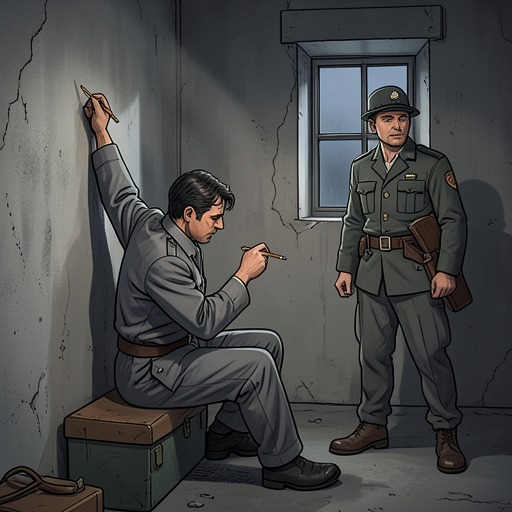
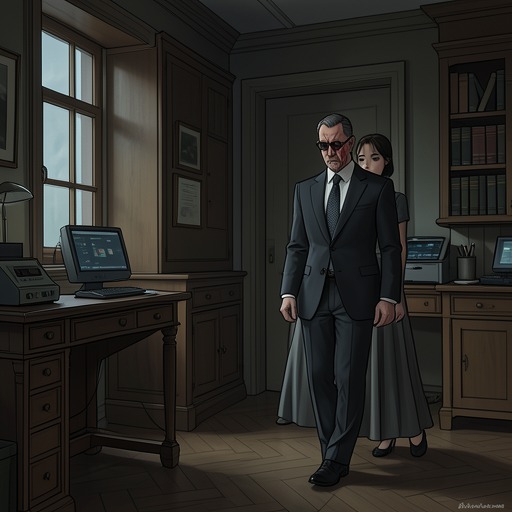
Man summons The unnamed narrator to his quarters after the examination and the narrator’s recovery. He has avoided seeing him since the examination ended, and the narrator understands that Man may be reluctant to face the person he has tortured. Their meeting is uneasy: Man offers tea, taps his fingers on his knees, and studies the newly written pages. The narrator still sees him as both the commissar and his closest confidant, a tormentor and a friend; the distinction between those identities has not been resolved by the confession.
Man skips over the usual inquiries about the narrator’s physical and mental health and announces that he and Bon are leaving both the camp and the country. The narrator had assumed he would die in confinement, so the news startles him. Man explains that a truck is waiting at the gates and that they are to go to Saigon, where Bon has a cousin who can help them. That cousin has twice tried to flee the country and been caught. Man predicts that the third attempt, with the narrator and Bon, will succeed.
The Cost of the Escape
The escape is not a sudden act of mercy but a plan Man has already bought. He has sent money to officials who will arrange for the right police officers to look the other way. The money comes from desperate women seeking to see their husbands in the camp: guards take a share, the remainder is divided between the Commandant and Man, and Man sends part to his wife and pays his superiors before using what remains for the escape. His question about whether money can buy anything in a communist country exposes the transaction’s bitter irony: the system’s official ideals have not displaced the very cash economy it claims to transcend.
Man draws a sharp distinction between the two men’s chances of release. A confession may be enough to free the narrator, given his revolutionary background, but it cannot secure Bon’s release. Bon’s crimes, Man says, mean that the Commandant must be paid a considerable sum; ensuring that both men can leave the country costs still more. The narrator’s freedom therefore depends not only on his written self-examination but also on money gathered from other prisoners’ families. Man’s friendship is real, but its material means are entangled with the camp’s coercive economy and the suffering of people who are not being released.
The Friendship Behind the Plan
The narrator recognizes the contradiction without treating it as a simple betrayal or redemption. Man has inflicted pain on him in the name of reeducation, yet has now risked his standing and spent the money available to him to buy the narrator’s and Bon’s escape. Their exchange turns on whether Man remains the friend the narrator knows and loves. The narrator embraces him and weeps. He understands that Man is setting him free while remaining unable or unwilling to leave the camp himself, except through death; release for one friend does not end the other’s confinement.
That separation sharpens the meaning of Man’s act. He does not accompany the men he frees, and the money cannot purchase his own escape from the life he has made within the camp. The narrator sees in Man’s facelessness an understanding of “nothing” that the narrator has only just begun to grasp. Their friendship survives not by making the torture disappear, but by holding the torturer and the friend together as parts of the same divided person.
Departure and Aftermath
The narrator and Bon leave with rucksacks, still unable to believe that their release is real. A baby-faced guard escorts them to the gates, where the Commandant and Bon wait beside an idling Molotova truck. The narrator and Bon have not seen each other for a year and many months. Bon looks gravely diminished: he wears patchwork rags and a black patch over one eye, and he limps. Their old comrades watch from behind the barbed wire. The two men can offer only smiles and a raised hand before climbing into the truck.
The Commandant asks whether they still have nothing to say. They do, but they fear that provoking him might undo their release, so they keep silent. Their departure leaves the other prisoners behind, covering their eyes as the truck raises red dust and turns out of sight. Bon later tells the narrator that a Lao farmer vanished in the river while trying to escape and that the darkest marine bled to death after a landmine sheared off his legs. Those deaths give the departure a cost beyond the two men’s freedom: escape is selective, and others who sought it did not survive.
The journey takes two numbing days over mountain passes and crumbling highways before the truck leaves them on Saigon’s outskirts. They make their way toward the house of Bon’s cousin, The Navigator, while Bon’s limp slows them. The narrator’s departure thus completes Man’s immediate plan but not a return to safety or peace: the country is again at war, and the city’s familiar popular music is absent. The escape opens a path beyond the camp while carrying forward the violence, loss, and unresolved loyalties that shaped it.